


Explore Nevada: Road Trips, Canyons & Hidden Landscapes
Nevada is so much more than Las Vegas. Drive beyond the Strip and you’ll find red-rock canyons, bizarre geological formations, remote desert wilderness, mountain landscapes, tiny historic towns, and some seriously cool slot canyons hiding throughout the state.
And the best part? You can turn many of them into road trips. You’re not just hunting slot canyons. You’re road-tripping across Nevada to find them.
From an easy slot canyon at Valley of Fire to the maze of formations at Cathedral Gorge and remote canyon country near Great Basin, these are some of the best places in Nevada to get out of the car and explore.
Some are easy walks. Some require scrambling. A few are definitely for experienced adventurers. And a few aren’t technically classic slot canyons at all, but they’re too interesting to leave off a Nevada canyon road-trip guide.
That’s part of what makes this list fun. The canyons are the excuse to get in the car and see another side of the Silver State. So, grab the water, check the weather, and let’s go explore.
As an Amazon affiliate, when you click on any of the links on this page and make a purchase, we may earn a small commission, at no cost to you! By using our affiliate links, you’ll find our favorite picks and support us at the same time. And we really appreciate your support!
Southern Nevada: Start With the Red Rocks
If you’re starting from Las Vegas, southern Nevada is an easy place to begin. But don’t think of these as simply Las Vegas day trips. Valley of Fire, Gold Butte, Lake Mead, and the surrounding desert can easily become their own weekend adventures.
And once you get away from the city, the landscape changes fast.
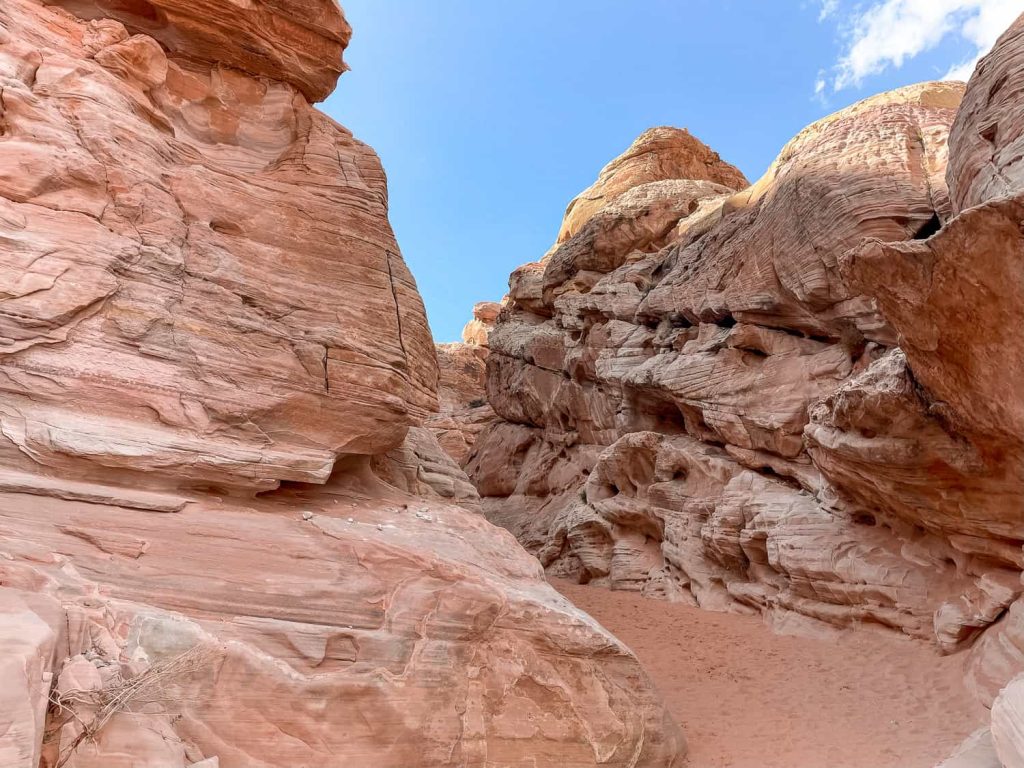
1. White Domes Slot Canyon – Valley of Fire State Park
If you want an easy introduction to Nevada slot canyons, start at White Domes in Valley of Fire State Park.
The White Domes Loop is only about a mile, but it packs a lot into a short hike. You’ll walk through colorful sandstone formations before entering a narrow slot canyon where the walls close in around you.
It’s also one of those trails where the scenery changes constantly. One minute you’re surrounded by the park’s famous red sandstone and the next you’re walking between much lighter-colored walls. There’s even a little movie history here. Remnants of the set from the 1966 western “The Professionals” can still be seen along the trail.
Best for: First-time slot canyon explorers, short hikes, photography, and families comfortable with uneven terrain.
Good to know: The trail includes loose sand, uneven terrain, stone steps, and a small scrambling section. Heat is a serious consideration in Valley of Fire, so plan accordingly.
2. Pastel Canyon – Valley of Fire State Park
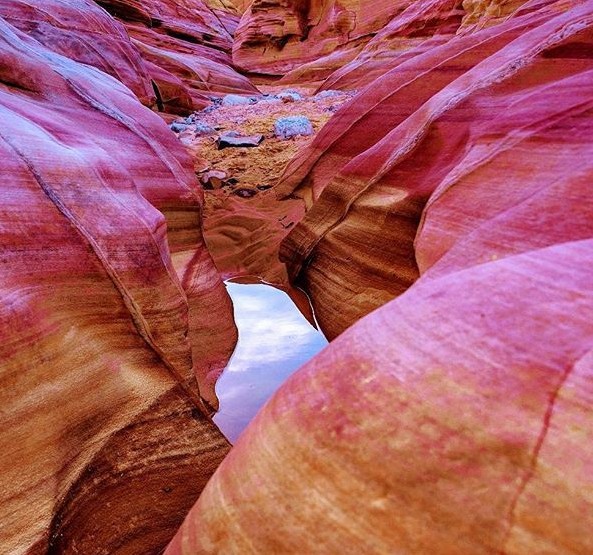
Pastel Canyon, also called Pink Canyon, is another colorful canyon experience inside Valley of Fire.
Instead of the bold red sandstone the park is famous for, you’ll find softer shades of pink, yellow, peach, and cream. It’s especially photogenic when the sunlight hits the striped walls.
Pastel Canyon is part of the Seven Wonders/Fire Wave area, so you can combine several colorful formations into one outing.
Best for: Photographers, colorful geology, short explorations, and anyone who likes the unusual side of Nevada.
Pro tip: You don’t necessarily need a huge hike to get impressive scenery here. Don’t forget your camera. We really like our Kodak PixPro because it not only takes great pictures, but nice videos.
3. Fire Wave Region Narrows – Valley of Fire State Park
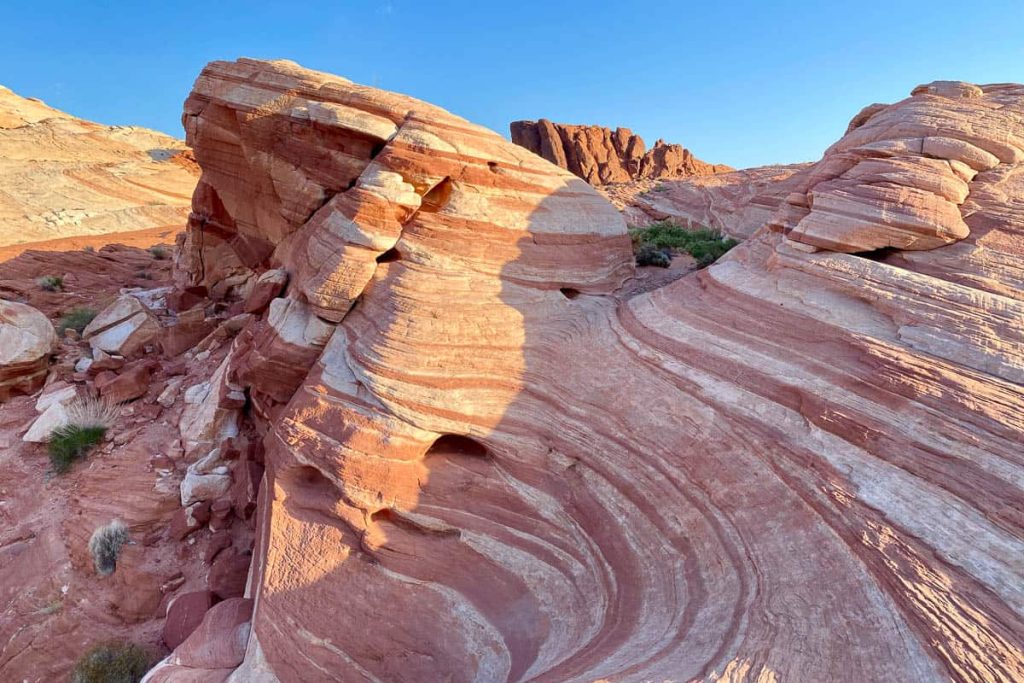
Another area in Valley of Fire, near the Seven Wonders area, is Fire Wave region and worth exploring while you are here.
The colorful sandstone formations here include several smaller narrows and slot-like passages. They’re not one single classic slot canyon, but they’re part of what makes this section of Valley of Fire such a fun place to wander.
And that’s an important part of exploring Nevada: some of the best canyon experiences aren’t necessarily marked with a big sign saying “Slot Canyon.”
Best for: Exploring, photography, geology lovers, and people who like wandering beyond one specific attraction.
Good to Know: The park closes some of the areas in summer because of heat. Spring and fall are best times to visit. Check website for updates on closures.
4. Drop Slot and Pinnacles – Valley of Fire State Park
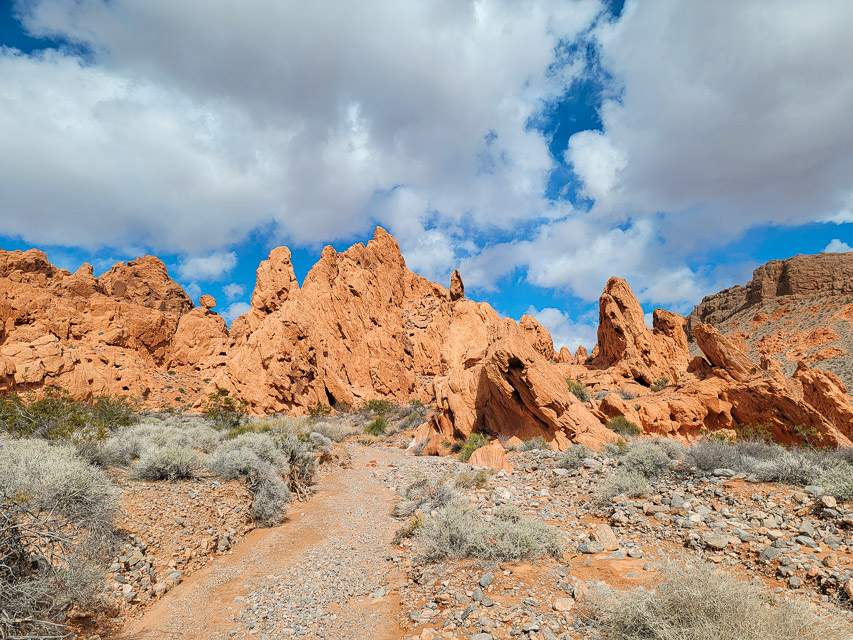
Now we’re getting into the more adventurous side of Valley of Fire. This is not the casual family-friendly version of Valley of Fire, but for experienced hikers.
Drop Slot and Pinnacles is an off-trail route that includes a narrow slot canyon. Nevada State Parks has described the route as roughly three miles with significant elevation gain and a slide-down section into the slot.
It’s an unmaintained route and has been offered as a guided hike by park staff and volunteers.
Best for: Experienced hikers looking for a more challenging Valley of Fire adventure.
Need to know: This is a guided tour for advanced hikers. Reservations are required through the Valley of Fire website when the hike is offered, and availability is sporadic. Check the current event schedule before planning around it.
Is Valley of Fire State Park Worth a Road Trip? Absolutely, not only can you explore the mentioned areas but there is plenty more to see from Elephant Rock to petroglyphs. Spend the day or part of a longer road trip.
Read Next: Valley of Fire State Park: Nevada’s Hidden Gem
Gold Butte & Lake Mead: Go Beyond the Easy Stops
This is where your Nevada road trip starts feeling more remote.
Gold Butte and the Lake Mead area offer a very different experience from Valley of Fire. Roads can become rough, cell service can disappear, and you need to take your planning seriously.
That’s also what makes this part of Nevada so interesting.
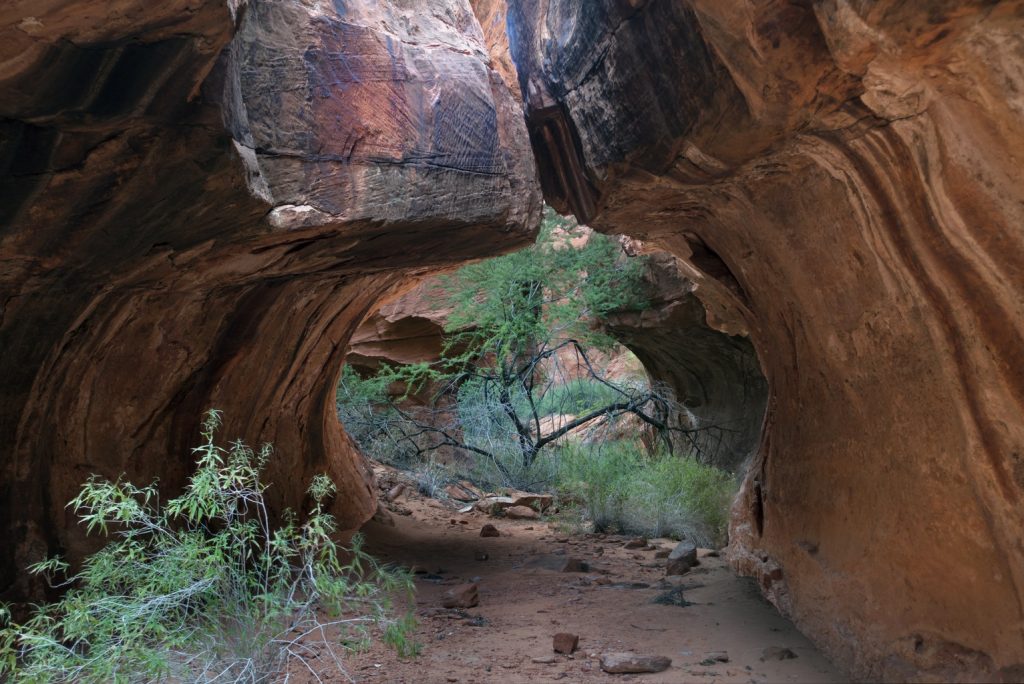
5. Seven Keyholes Canyon – Gold Butte National Monument
For something completely different, head toward Gold Butte National Monument.
Seven Keyholes Canyon is known for dramatic sandstone formations and narrow canyon sections created by erosion. The rocks have been shaped by wind and water into all kinds of unusual forms.
Gold Butte is much more remote than Valley of Fire. The roads can be rough, trailheads may be minimally marked, and cell service can be limited. There are no facilities here, so come prepared.
If you love backroad road trips, the Gold Butte Backcountry Byway is a great drive. However, it is a rugged 62-mile route requiring sturdy tires and high-clearance vehicles, with the final section especially rough.
Best for: Experienced backcountry travelers, geology lovers, photographers, and people who want to get away from the crowds.
Pro tip: The vehicle you’re driving matters. Check current road conditions before heading into the backcountry.
Learn More: Ultimate Guide to Dirt Road Travel: How to Prepare for Backroads and Beyond
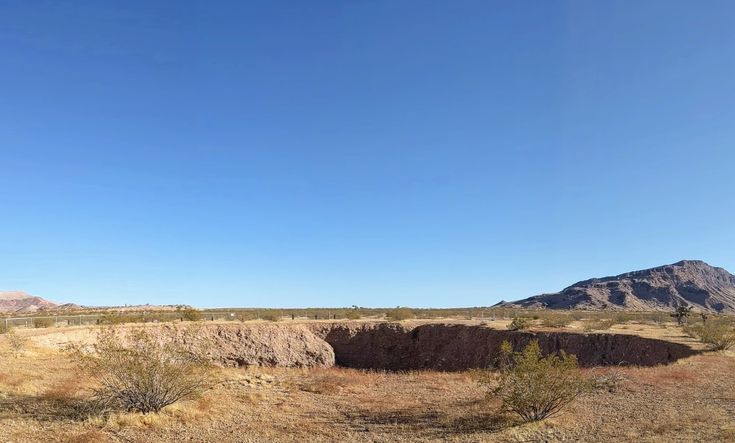
6. Devil’s Throat – Gold Butte National Monument
While you’re in Gold Butte, add Devil’s Throat to your list of unusual canyon-area formations.
A 110-foot-deep sinkhole on the edge of the Gold Butte National Monument is one of the most unusual features of this area. The ground around the sinkhole is very unstable so you can only see the sinkhole from afar. But it’s so different it’s worth checking out.
This is another example of the kind of geological oddities that make Gold Butte worth the effort. You’re not coming here for one polished trail with a sign every few hundred feet. You’re coming for remote desert scenery, strange rock formations, canyons, and the feeling that you actually got away from everything.
Best for: Backcountry explorers, photographers, and adventurous road trippers.
Pro Tip: Put a dash cam in your vehicle so you can catch some of the amazing while navigating.
Is Gold Butte Worth a Road Trip? Yes, Gold Butte is a remote, rugged section of Mojave Desert backcountry with sandstone formations, petroglyphs, and expansive views. It covers nearly 300,000 acres, so think of this as a destination rather than a single hike. If you prepare ahead it is a great adventure.
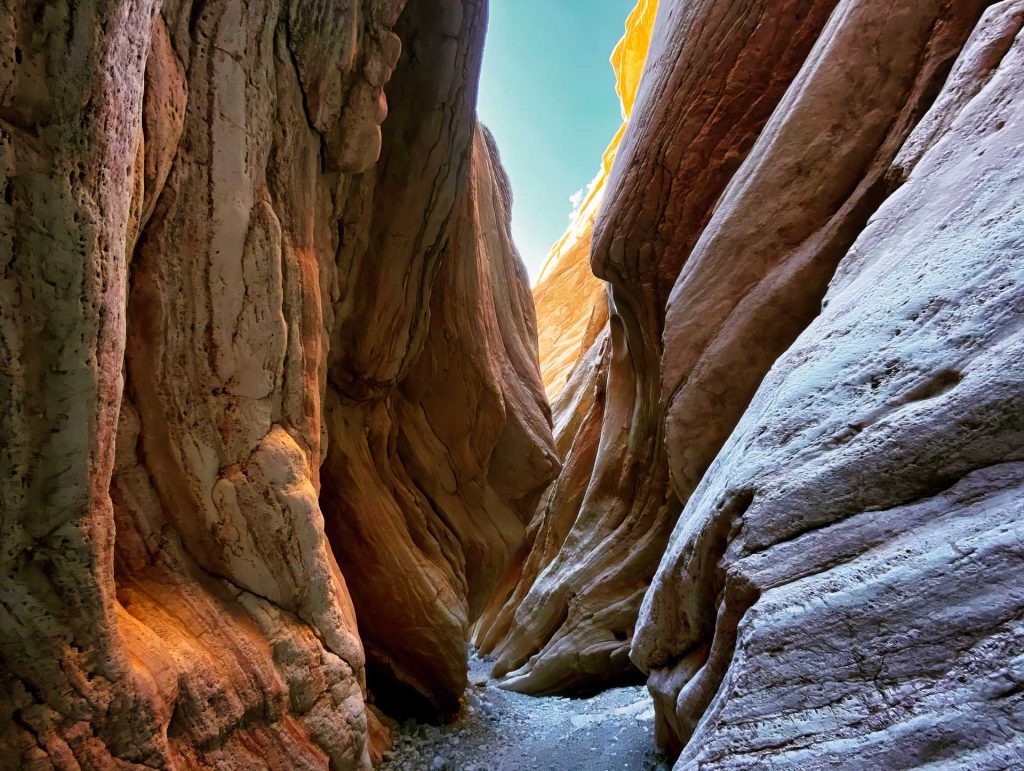
7. Anniversary Narrows – Muddy Mountains Wilderness
Anniversary Narrows is one of the most interesting canyon adventures in southern Nevada.
This formation is a 600-foot-deep slot canyon within the Muddy Mountains Wilderness. The landscape here is dramatically different from some of the other places on this list. Instead of soft clay formations, you’ll find layers of limestone and sandstone carved into rugged desert canyons.
And because this is a wilderness/backcountry experience, don’t expect the same level of development you’ll find at Valley of Fire or Cathedral Gorge.
Best for: Experienced hikers and people looking for a more remote canyon experience.
Good to know: Flash floods are a serious concern in narrow desert canyons. Never enter a slot canyon when storms are threatening, even if it’s sunny where you’re standing.
Worth a Road Trip? Yes, if you’re already exploring the Lake Mead/Muddy Mountains area and are prepared for backcountry conditions.
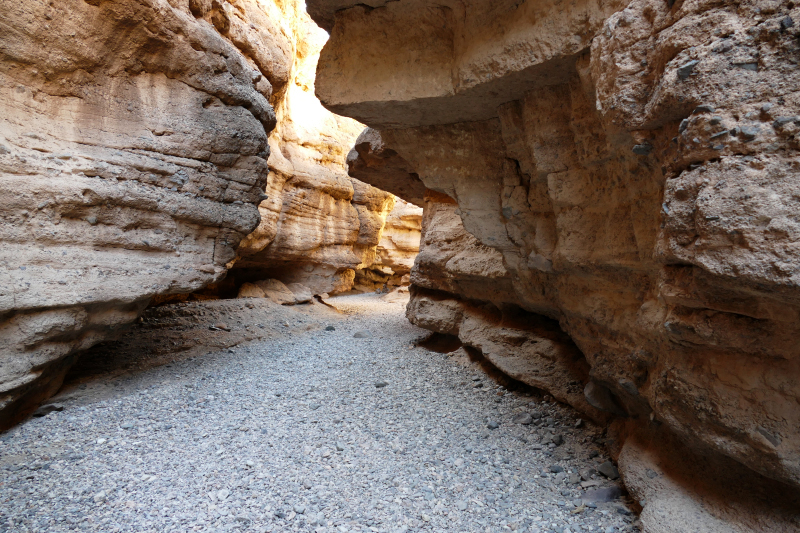
8. White Owl Canyon – Lake Mead National Recreation Area
White Owl Canyon is a shorter canyon adventure in the Lake Mead area.
It’s a good option if you’re looking for something closer to Las Vegas and don’t want to commit to a major backcountry expedition.
From the trailhead down into the wash the trail is steep and made up of loose rocks and dirt. As you follow the wash, the trail narrows and deepens into a slot canyon with 100-foot vertical walls in the most confined section.
Best for: Shorter adventures, first-time canyon explorers, and people building a Lake Mead Day trip.
9. Spooky Canyon – Lake Mead National Recreation Area
Yes, Nevada has a Spooky Canyon of its own.
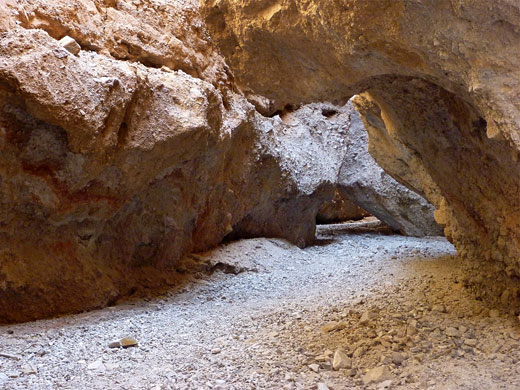
This small, hidden canyon is near the Arizona/Nevada border in the Lake Mead area and offers a more adventurous experience than White Owl Canyon. The trailhead is only about 30 feet from the parking area on US-93, but the parking area and canyon aren’t marked.
The main canyon is about a mile round trip and includes some scrambling to reach the beginning. There are also three side canyons, including one particularly dark and spooky section, plus two pour-overs farther up the main canyon.
Best for: Adventurous hikers who are comfortable with scrambling.
Good to know: Stick with the main slot canyon unless you’re an experienced hiker. The side canyons and pour-overs are more demanding.
10. Arizona Hot Springs Canyon – Lake Mead National Recreation Area
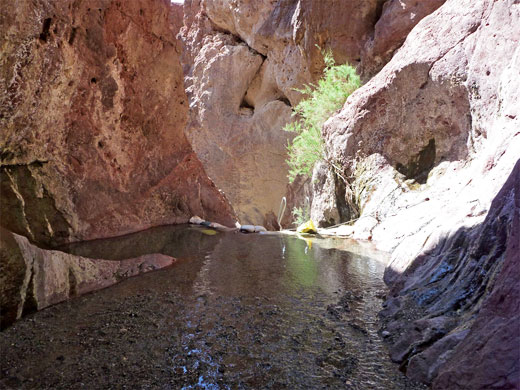
Technically, you’re looking at a canyon adventure rather than a classic slot canyon here, but Arizona Hot Springs Canyon deserves a spot in a larger Nevada canyon guide.
The route follows a canyon toward the Colorado River and the hot springs near Hoover Dam. The scenery is dramatic, but the hike involves scrambling and more challenging terrain. The trail is strenuous and has seasonal heat-related closures.
Best for: Experienced hikers who want a canyon hike with a hot-springs payoff.
Important: This is one to plan around the season, not one to casually squeeze into a hot summer afternoon. Check the website for seasonal closures.
11. Gold Strike Canyon – Lake Mead National Recreation Area
Another canyon near the Colorado River is Gold Strike Canyon.
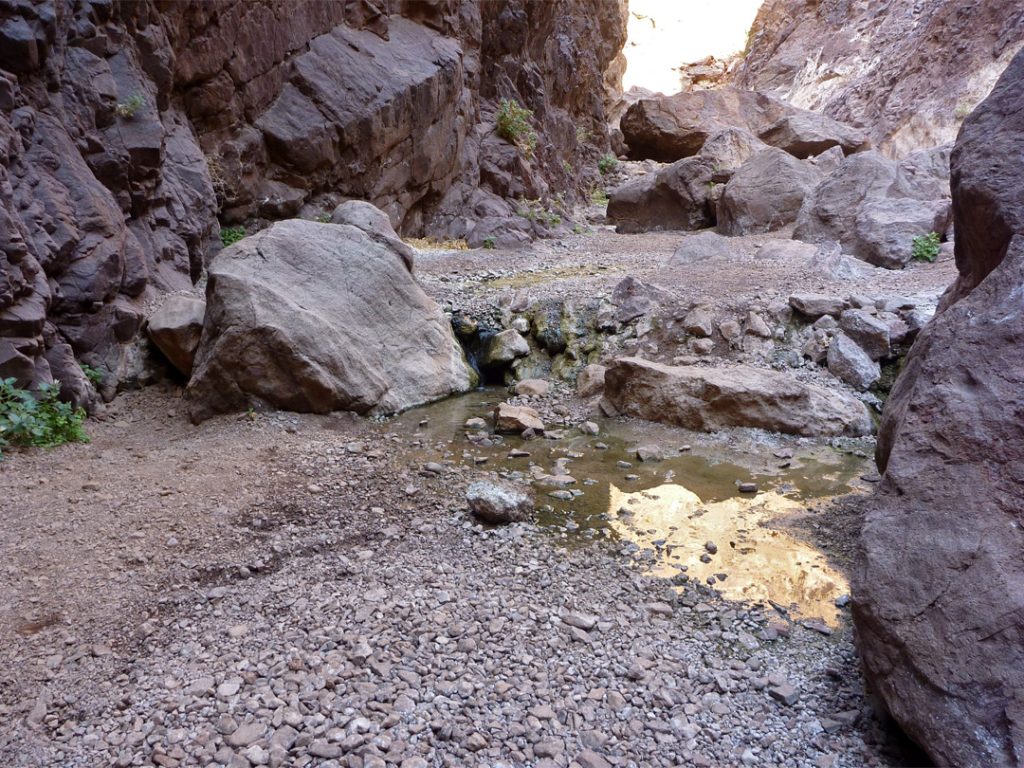
This is one of those hikes that sounds easier when you hear the mileage than it actually is. There is scrambling, steep terrain, and rope-assisted sections. The route has roughly 1,000 feet of elevation changes and seven dry falls of varying heights, making it a Class 2 canyoneering route.
Best for: Experienced hikers and people comfortable with scrambling and canyoneering-style terrain.
Need to know: Annual seasonal closures happen from May 15 through September 30. Even during the cooler months when the Gold Strike Hot Springs Trailhead is open, it’s important to check the weather and bring lots of water to prevent dehydration. Always check the current NPS information before planning your hike.
Is Lake Mead Worth a Road Trip? Yes. If you love to explore and find new adventures, Lake Mead is a great place to spend a day. Make a day of exploring Lake Mead and Hoover Dam.
Spring Mountains: A Completely Different Nevada
One of the things I love about exploring Nevada is how quickly the landscape can change. You can leave the desert behind and climb into the mountains without ever leaving the state.
12. Kyle Canyon Slots – Spring Mountains
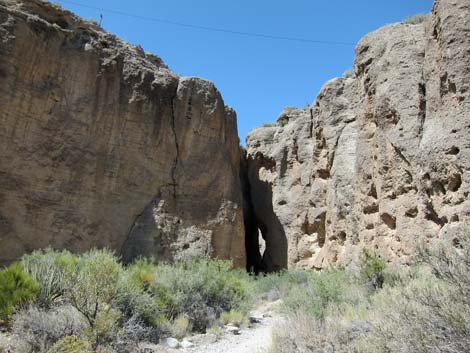
You don’t have to stay in the desert to find slot canyons in Nevada. The Kyle Canyon Slots, sometimes called Harris Slots, are up in the Spring Mountains northwest of Las Vegas.
This short canyon contains multiple narrow sections carved into conglomerate rock. The first slot is followed by a wider canyon section and then another narrow slot. The entire slot section is only about 0.2 miles one way, making this a very different experience from a long canyon trek.
And because you’re at higher elevation, the environment feels completely different from the Mojave below.
Best for: Short adventures and people looking for a very different side of southern Nevada.
Pro tip: The access roads aren’t your typical paved park roads. Check conditions and don’t assume every vehicle can comfortably reach the trailhead.
Worth a Road Trip? Yes, especially as part of a Mount Charleston/Spring Mountains Day trip.
Eastern Nevada: Make the Great Basin Highway Your Route
The Great Basin Highway is practically tailor-made for a great road trip. The entire trip starts in Las Vegas to Ely and Great Basin. You can stop at Valley of Fire, Cathedral Gorge and Kershaw-Ryan State Park. There is a lot more to see along the way with small towns and magnificent scenery.
13. Moon Caves – Cathedral Gorge State Park
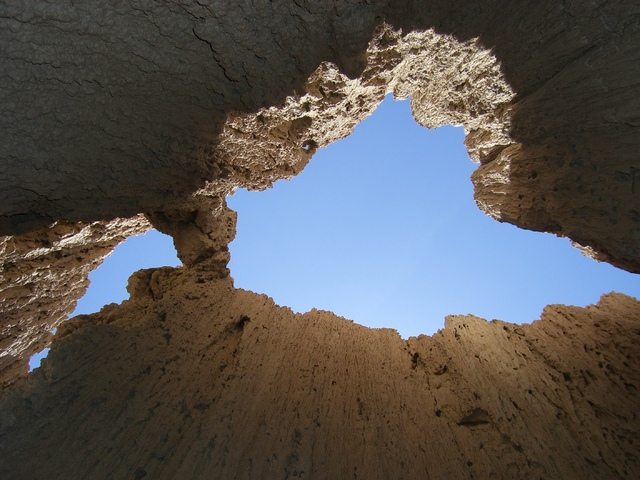
If there’s one place that deserves serious attention in a Nevada slot canyon road-trip guide, it’s Cathedral Gorge State Park. The park is filled with narrow passages carved into soft bentonite clay. The result looks almost like a giant natural maze.
The Moon Caves are one of three major canyon areas in the park. Despite the name, these aren’t traditional caves. They’re narrow erosional passages that twist through the formations.
You’ll find more than 30 small chambers connected by twisting passages, along with bright white mineral deposits that catch the sunlight. The caves include two slot canyons with several offshoots.
Best for: Families, photographers, casual explorers, and anyone who wants to wander through a truly unusual landscape.
14. Canyon Caves – Cathedral Gorge State Park
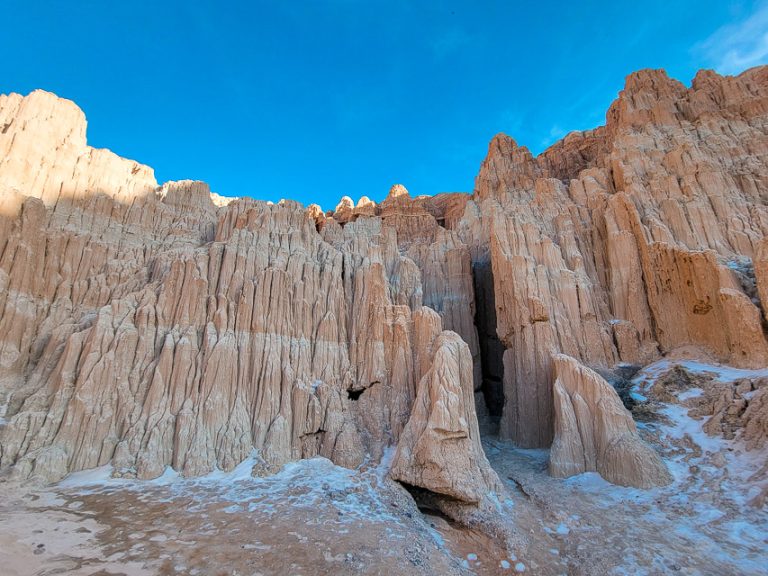
Next up are the Canyon Caves, another section of Cathedral Gorge’s maze of narrow passages.
The formations here have that almost sculpted-from-clay appearance that makes Cathedral Gorge so different from the sandstone slots farther south. The park’s soft bentonite formations are constantly shaped by erosion and weather, creating a natural playground of narrow passages and dead ends to explore.
A short trail leads from the parking area up into the hills, where you can also look out over the peaks and spires of Cathedral Gorge.
Best for: Explorers, photographers, families, and anyone fascinated by unusual geology.
Pro tip: Don’t just drive into Cathedral Gorge, snap a few photos, and leave. Get out and explore the formations. That’s where the fun is.
15. Cathedral Caves – Cathedral Gorge State Park
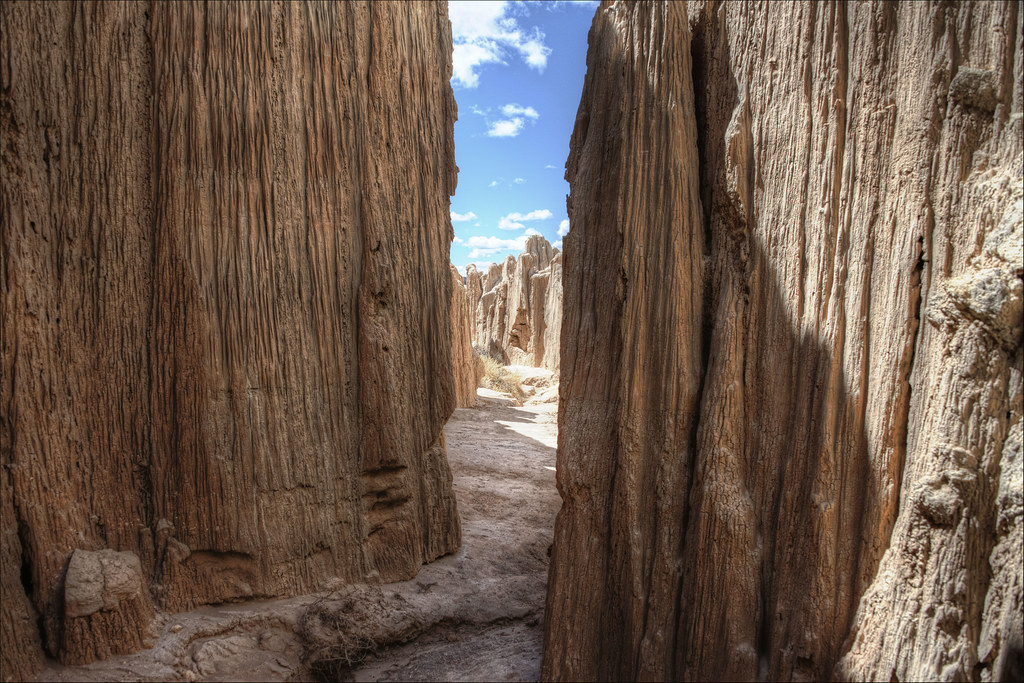
The third major area is Cathedral Caves. Again, these aren’t caves in the traditional sense. They’re narrow side canyons and passageways within the formations.
This canyon feels a bit like a labyrinth because there are a variety of paths to choose from. Some sections become surprisingly tight, while others open into larger chambers surrounded by towering walls. You’ll find a large slot canyon and cave system with several canyon offshoots that differ in length and width.
Best for: Exploring, photography, and people who enjoy wandering rather than simply following a trail from Point A to Point B.
Good to know: The formations are fragile. Stay off the walls and don’t disturb anything. The whole point is to leave this crazy landscape intact for the next person.
Is Cathedral Gorge Worth a Road Trip? Absolutely. This is one of the places to build an entire eastern Nevada road trip around. Don’t make Cathedral Gorge your only stop. Make it part of the trip.
Pro Tip: Be sure to carry extra water with you when traveling. We also bring this 5-Gallon water jug with us. It is easy to use with little spillage and fits on floor of our back seating area.
16. Devil’s Gate – Great Basin Area
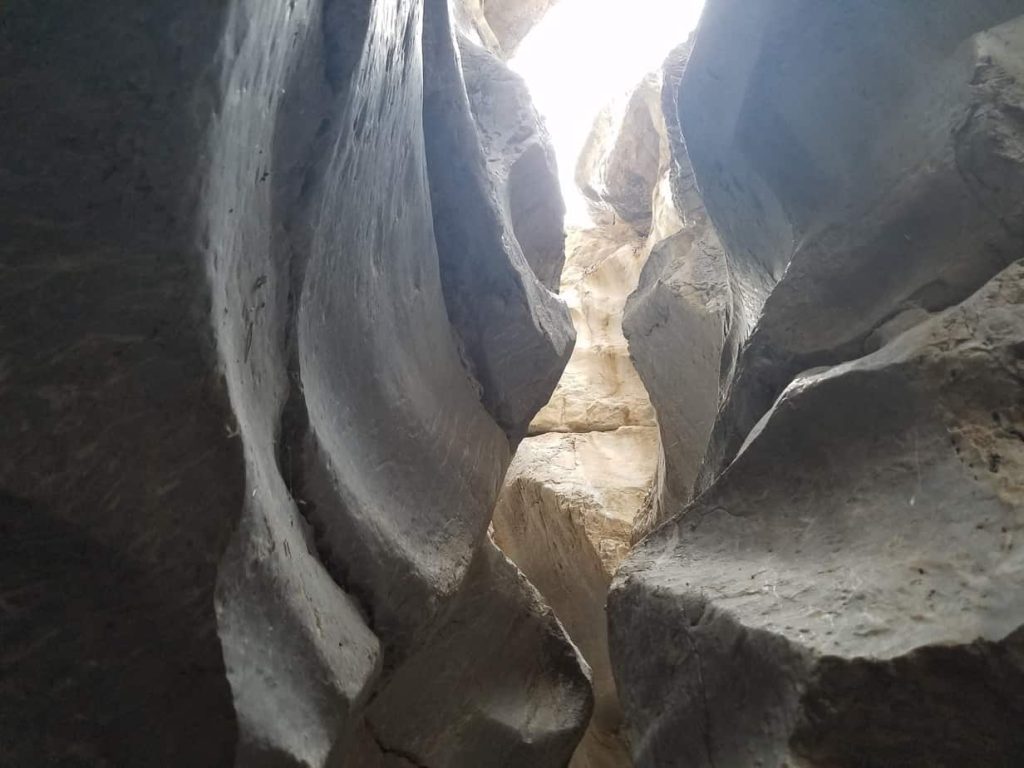
Devil’s Gate is in eastern Nevada, in the Great Basin region, and is a dramatic limestone canyon experience.
This one is much more of a road-trip adventure than a quick Vegas day trip. The access includes a long stretch of dirt road, and conditions can become rough. That’s part of the appeal, though.
You get the chance to see a very different side of Nevada, far from the red sandstone around Las Vegas and into the high-desert landscape surrounding Great Basin.
Best for: Experienced back road drivers, remote-landscape lovers, and people who don’t mind getting off the pavement.
Good to know: High-clearance and 4WD capability may be appropriate depending on current road conditions. Check before you go rather than relying on an old trip report.
Worth a Road Trip? Yes, but this is a destination to plan for, not an impulse stop. While at Great Basin National Park explore Lehman Caves and take a scenic drive to Wheeler Peak. Baker is a great base town for Great Basin National Park.
Northern Nevada: Go Even Farther Off the Beaten Path
If southern Nevada is dramatic and eastern Nevada is road-trip friendly, northern Nevada is where things can get seriously remote. This is where you start trading easy access for solitude.
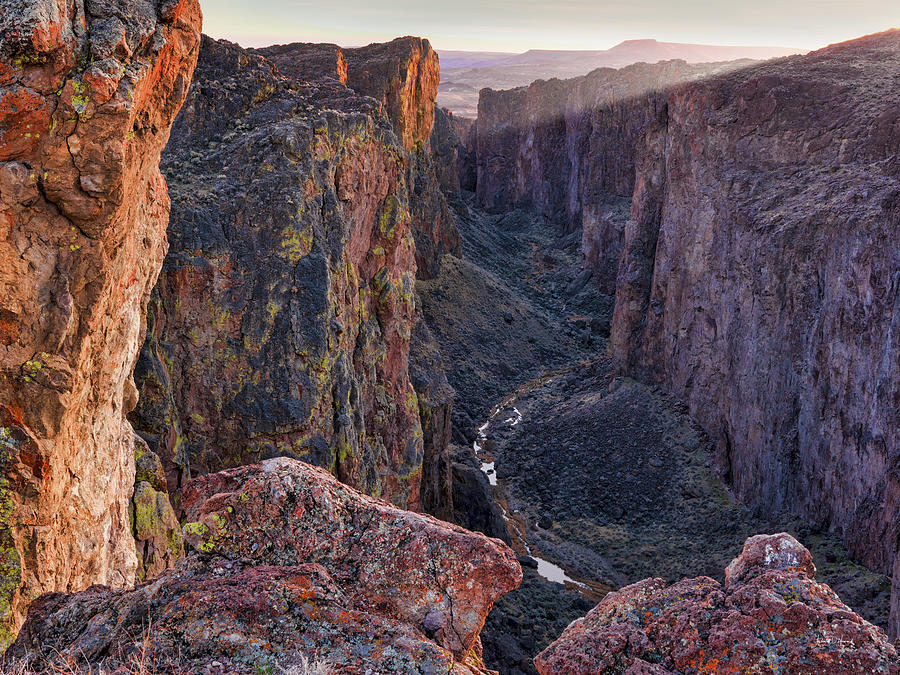
17. Thousand Creek Gorge – Northern Nevada
If you’re looking for something that feels completely different from the popular southern Nevada spots, put Thousand Creek Gorge on the list. Located in Sheldon National Wildlife Refuge it is definitely different than other slot canyons.
This remote canyon in northern Nevada has towering walls, nearly 500 feet tall and a perennial stream, making it more of a deep canyon/gorge experience than a classic narrow sandstone slot. The main trail from Virgin Valley Campground is a several miles round trip, but high-clearance vehicles can get closer to portions of the gorge.
Best for: Experienced Road trippers, solitude seekers, and people looking for a completely different Nevada landscape.
Worth a Road Trip? Yes, if you’re already exploring northern Nevada and want a truly off-the-beaten-path adventure. This is a great part of the state where you can visit the wildlife refuge, check out the black opal mines, head into the Black Rock Desert and explore downtown Gerlach.
18. Grapevine Canyon Mini Slot – Southern Nevada
Let’s bring things back south for one more quirky Nevada canyon.
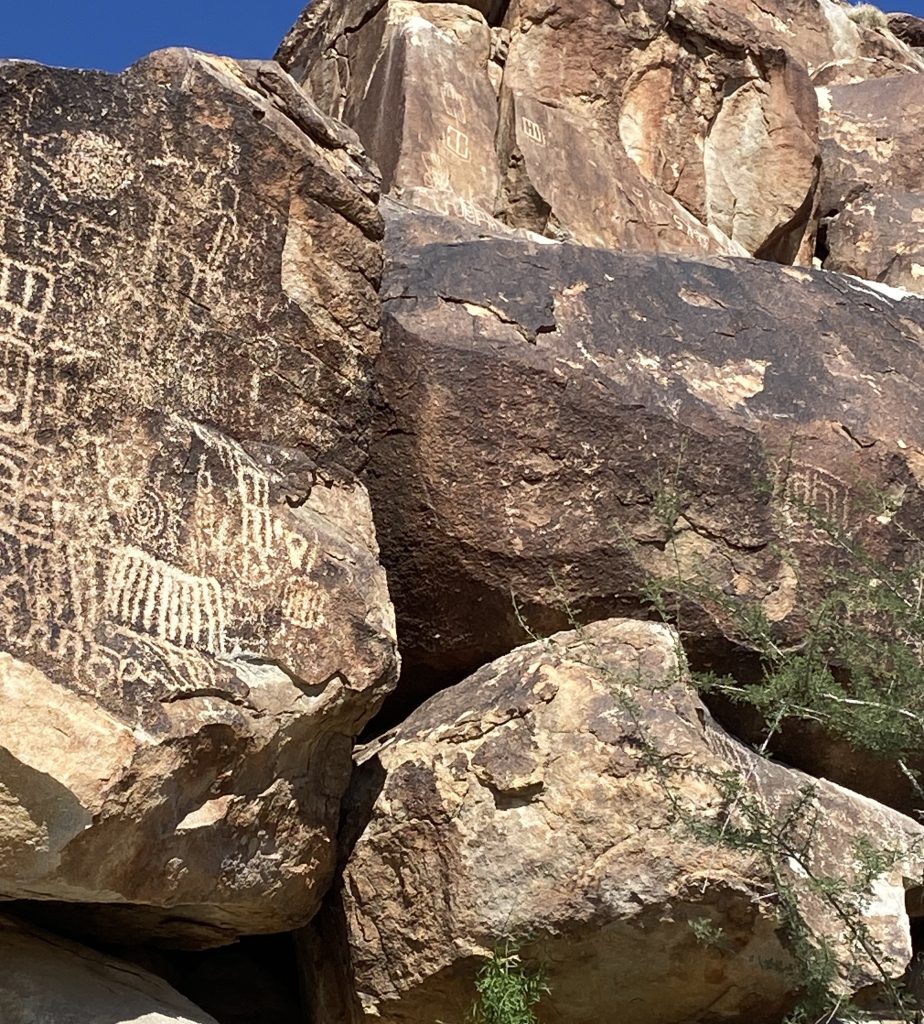
Grapevine Canyon is a picturesque rocky ravine in the desert that can be accessed via a dirt trail off Christmas Tree Pass. The Christmas Tree Pass scenic drive takes you through Avi Kwa Ame National Monument, so the drive itself becomes part of the adventure.
Grapevine Canyon is known for numerous petroglyphs on large boulders near its entrance, along with cacti, unusual rock formations, granite slabs and spires. There’s also a short slot canyon tucked into the landscape.
Best for: Road trippers, history lovers, photographers, and anyone who likes combining several attractions into one drive.
While you’re there: Avi Kwa Ame National Monument has plenty of other places to explore, including Walking Box Ranch and Hiko Spring Canyon
Worth a Road Trip? Absolutely. This is exactly the kind of stop that makes a Nevada road trip more than just checking off a hike. After exploring here, head to Laughlin for water adventures or some casino time.
Learn More: Exploring Avi Kwa Ame National Monument: A Journey Through History, Nature, and Sacred Lands
How to Turn These Canyons into a Nevada Road Trip
The great thing about this list is that you don’t have to visit these places one at a time. Nevada is practically made for turning canyon hunting into a road trip. And I think that’s the best way to approach this list.
Southern Nevada Canyon Weekend
Las Vegas to Gold Butte
Start with the easy-to-access formations at Valley of Fire, then work your way toward Lake Mead, the Muddy Mountains and Gold Butte.
You’ll get colorful sandstone, narrow canyons, desert wilderness, rock art, scenic drives, and some seriously remote scenery. For a more scenic route head through Lake Mead on the scenic drive to Valley of Fire rather than taking the highway.
Best for: A shorter weekend escape from Las Vegas.
Great Basin Highway Canyon Road Trip
Las Vegas to Great Basin National Park
This is longer trip. It can be done in a few days, but to have time to really explore plan 5 days or more.
The Great Basin Highway gives you a chance to turn several of the places on this list into one long Nevada adventure. And don’t just drive from park to park.
Stop in Valley of Fire on your way to Caliente. Explore Rainbow Canyon and Kershaw-Ryan State Park. Next is Cathedral Gorge State Park. Stop in Pioche and relax a bit. Head to Ely and explore Ward Charcoal Ovens State Park. Great Basin National Park will be the last stop.
Best for: A multi-day Nevada road trip where the drive is just as important as the destination.
Southern Nevada + Avi Kwa Ame Road Trip
Las Vegas to Laughlin
Stop at Lake Mead and explore a bit there and don’t forget a trip to Hoover Dam. Head to Avi Kwa Ame National Monument and take Christmas Tree Pass Scenic Drive. Head to Grapevine Canyon and explore the canyon. The last stop will be Laughlin.
This one is perfect if you want a desert road trip with a little bit of everything. You can combine canyon scenery, petroglyphs, unusual rock formations, scenic drives and the wide-open landscape around Avi Kwa Ame.
Best for: A slower-paced scenic drive with lots of opportunities to stop and explore.
What to Know Before Exploring Nevada’s Canyons
Not every canyon on this list is created equal. Some are short walks where you can be back at the car in an hour. Others involve scrambling, remote roads, limited cell service, or serious route-finding.
I wouldn’t count on the mileage for a hike when planning. A longer hike may be really easy and won’t take long where a short one-mile hike may have lots of scrambling and take a couple hours.
Pay attention to the road, terrain, weather, and access. And if you’re turning one of these into a road trip, the road itself may be half the fun.
Before you go:
Check the weather before entering a narrow canyon. Remember that flash floods can occur from storms miles away.
Carry more water than you think you’ll need and avoid the hottest part of the day.
Tell someone where you’re going.
Download maps before heading into areas with limited cell service.
Check road conditions before remote drives. Muddy back roads are no fun.
Watch for scrambling, pour-overs, loose rock, and narrow passages.
Respect rock art and other cultural resources.
Stay on designated routes where required.
Don’t climb on fragile clay formations.
If a road requires a high-clearance or 4WD vehicle, believe the description. Don’t disregard and then end up stuck in an area with no cell service.
Final Thoughts
Nevada is one of those states where the journey really is part of the adventure.
You might leave Las Vegas expecting a quick drive to a red-rock canyon and end up spending the weekend exploring a state park, wandering through a tiny historic town, chasing another geological oddity down a dirt road, or staying up late under some of the darkest skies in the country. That’s what I love about exploring Nevada.
There’s always another road, another canyon, another weird geological formation, or another little town waiting around the next bend. And you don’t have to be a hardcore hiker to enjoy it.
Some of these places are short walks. Some are scenic drives with a bit of exploring thrown in. Others are legitimate adventures that require experience and preparation. The canyons are just the excuse to get in the car.
So, if you’ve already checked the obvious Nevada road trips off your list, it’s time to start looking for the off-the-beaten path adventures.
We love sharing tips and information we learn along the way to help you plan your next journey. We hope to inspire you to find your adventures, have lots of fun and make many memories.