

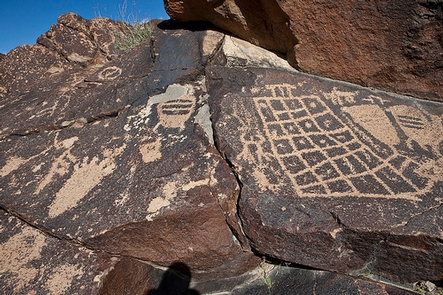
Nevada is known for desert landscapes, red-rock formations, lonely highways, and, of course, Las Vegas. But scattered throughout the state are something much older: petroglyphs and other examples of Indigenous rock art created thousands of years ago.
You can find these ancient images on desert boulders, canyon walls, rock shelters, and remote archaeological sites. Some are surprisingly easy to reach, while others require a high-clearance vehicle, a longer hike, or a little more planning.
What I love about exploring Nevada’s petroglyph sites is that they often come with a bonus: you’re getting out into some seriously beautiful and remote parts of the state. Some sites are close to major roads or cities. Others can turn into an entire road-trip adventure.
And while it’s tempting to look at these carvings simply as interesting designs on rocks, they are much more than that. These places are part of the cultural heritage of Indigenous peoples who have lived in and traveled through Nevada for thousands of years.
So, grab your water, download your maps, and let’s explore some of the best places to see ancient rock art in Nevada.
A quick note: Petroglyphs are images carved, pecked, etched into rock. Pictographs are painted onto rock. This list includes both because Nevada has some fascinating examples of each.
As an Amazon affiliate, when you click on any of the links on this page and make a purchase, we may earn a small commission, at no cost to you! By using our affiliate links, you’ll find our favorite picks and support us at the same time. And we really appreciate your support!
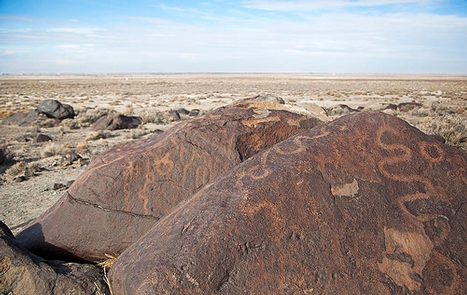
Petroglyph Sites in Central Nevada
If you’re traveling through central Nevada, especially along U.S. Highway 50, you don’t have to go far to find ancient rock art.
1. Grimes Point Archaeological Area – Near Fallon
Grimes Point is one of the most accessible archaeological and petroglyph sites in Nevada, making it a great place to start exploring Nevada’s ancient rock art.
The area contains petroglyphs carved into dark basalt boulders covered with desert varnish. Some of the carvings are believed to date back thousands of years, and the site was used by Indigenous peoples long before modern Nevada existed.
A short, self-guided interpretive trail takes you past examples of the rock art, making Grimes Point an easy addition to a Nevada road trip.
Best For: First-time visitors, history lovers, and an easy archaeological stop
Road Trip Worthy? Absolutely. It’s especially easy to add to a trip through Fallon or along U.S. 50.
Highlights: Petroglyphs, interpretive trail, desert landscape
Best Time to Visit: Spring and fall for milder temperatures
Good to Know: Grimes Point is located near Hidden Cave, so you can combine the two into one archaeological stop.
2. Hidden Cave – Near Fallon
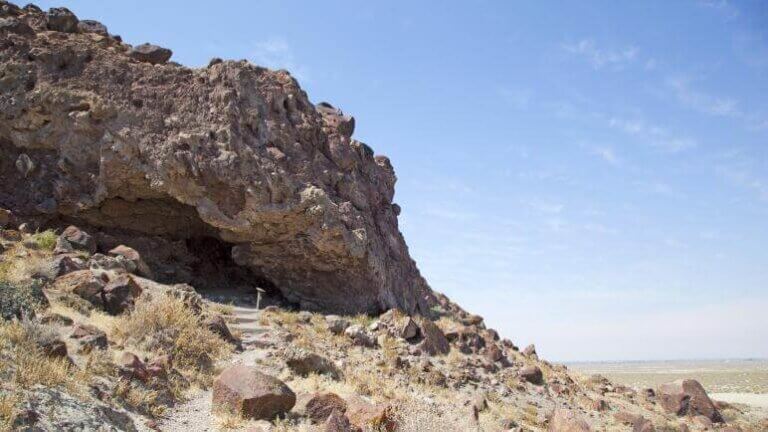
Just a short distance from Grimes Point, Hidden Cave offers another fascinating look at Nevada’s prehistoric past.
Unlike an open-air petroglyph site, Hidden Cave was used as a shelter and storage area by ancient peoples. Archaeological excavations uncovered artifacts that help tell the story of how people lived in the region.
Guided tours give visitors the opportunity to learn more about the cave and the archaeological discoveries made here.
Best For: History buffs, archaeology enthusiasts, and anyone who wants more than a quick roadside stop
Road Trip Worthy? Yes. Pair it with Grimes Point for a much better understanding of the area’s prehistoric history.
Highlights: Guided tours, archaeological artifacts, prehistoric history
Best Time to Visit: Year-round, but check current tour schedules before visiting
Pro Tip: Use a dash cam whenever you’re road tripping. You’d be amazed at the scenery you didn’t notice and you have some great video of your trip.
3. Hickison Petroglyph Recreation Area – Near Austin
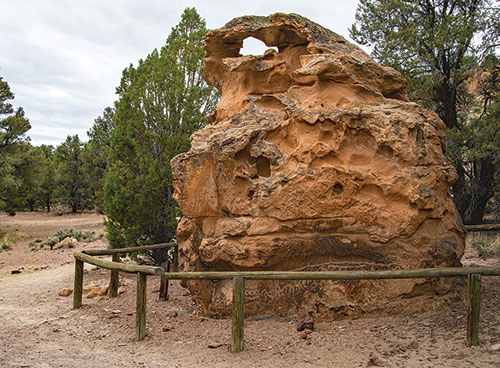
If you’re driving Nevada’s famous Loneliest Road in America, Hickison Petroglyph Recreation Area is one of those stops that’s easy to overlook but definitely worth adding to the itinerary. It’s about 24 miles east of Austin and worth the stop.
The site features ancient petroglyphs spread across rocky outcroppings, along with big views across the surrounding landscape.
It’s also a good reminder that some of Nevada’s best archaeological stops aren’t necessarily surrounded by crowds or big visitor centers. Sometimes it’s just you, the desert, the rocks, and thousands of years of history.
Best For: U.S. 50 road trippers, photographers, and travelers looking for an easy cultural stop
Road Trip Worthy? Definitely. Especially if you’re already traveling the Loneliest Road in America.
Highlights: Petroglyph-covered boulders, mountain views, desert scenery
Best Time to Visit: Spring and fall
Read Next: Surviving and Thriving on Nevada’s Loneliest Road: A Complete Guide to U.S. Highway 50
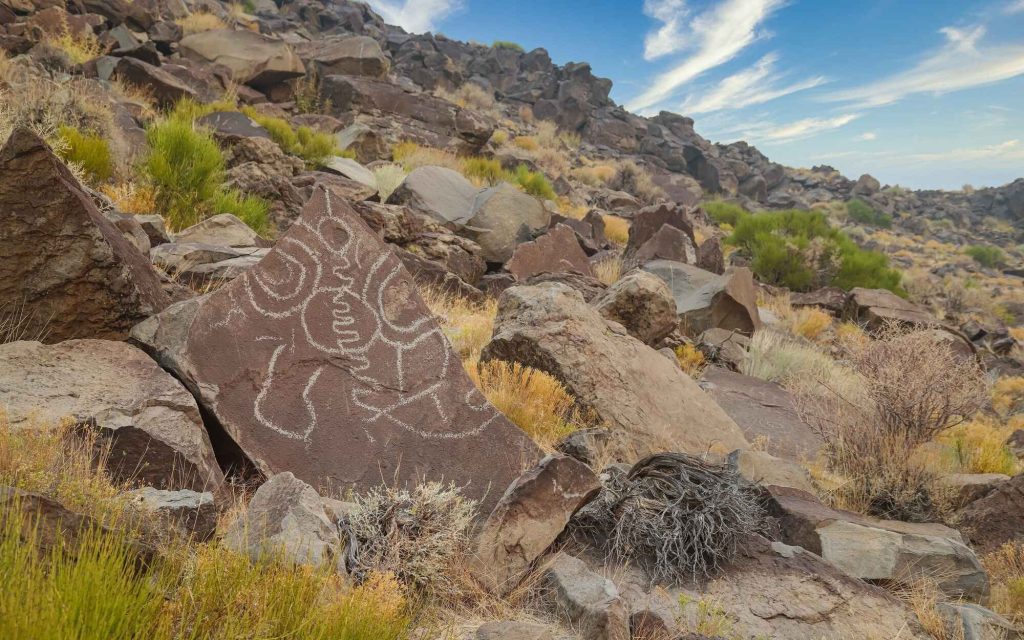
4. Lagomarsino Canyon – Near Virginia City
Lagomarsino Canyon is one of Nevada’s larger and more remote concentrations of petroglyphs, with thousands of individual carvings spread throughout the area.
Getting there is part of the adventure. The remote setting and rugged roads make this very different from an easy roadside archaeological stop. A high-clearance vehicle is recommended, and you’ll want to plan ahead before heading into this kind of backcountry terrain.
Best For: Experienced explorers, photographers, and travelers who like getting off the beaten path
Road Trip Worthy? Yes, but this is one to plan for rather than casually add to a day of sightseeing.
Highlights: Extensive petroglyphs, remote landscape, rugged terrain
Best Time to Visit: Spring and fall for cooler temperatures
Good to Know: Check road conditions before you go and make sure your vehicle is appropriate for the route.
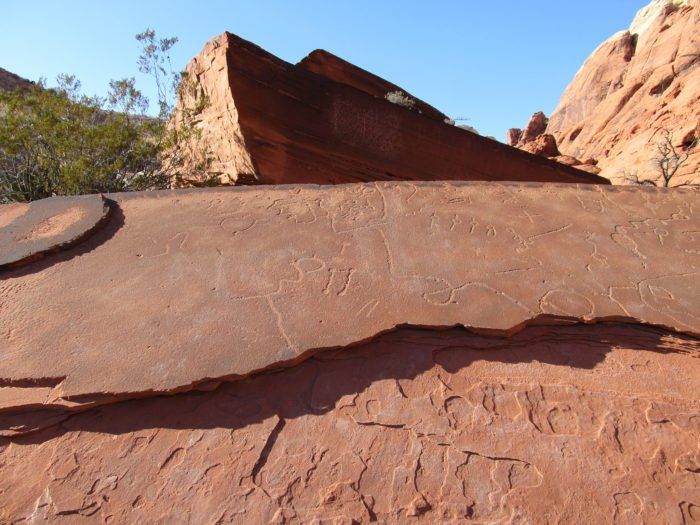
Petroglyphs Around Las Vegas
You don’t have to travel hundreds of miles from Las Vegas to find ancient rock art. Several important sites are located within Southern Nevada.
5. Red Rock Canyon National Conservation Area – Near Las Vegas
Red Rock Canyon is famous for its towering red sandstone cliffs and scenic desert landscape, but there’s more history here than the dramatic scenery might suggest.
The Willow Springs area and surrounding locations contain ancient rock art sites, giving you an opportunity to combine Nevada’s geology with its cultural history. The Willow Springs petroglyph area involves a relatively short hike, while other routes, including Calico Tanks, can be more strenuous.
Best For: Combining hiking, scenery, and history near Las Vegas
Road Trip Worthy? If you’re already visiting Red Rock Canyon, absolutely. The rock art adds another layer to an already impressive landscape.
Highlights: Willow Springs petroglyphs, red-rock scenery, hiking
Best Time to Visit: Fall through spring, when desert temperatures are more comfortable
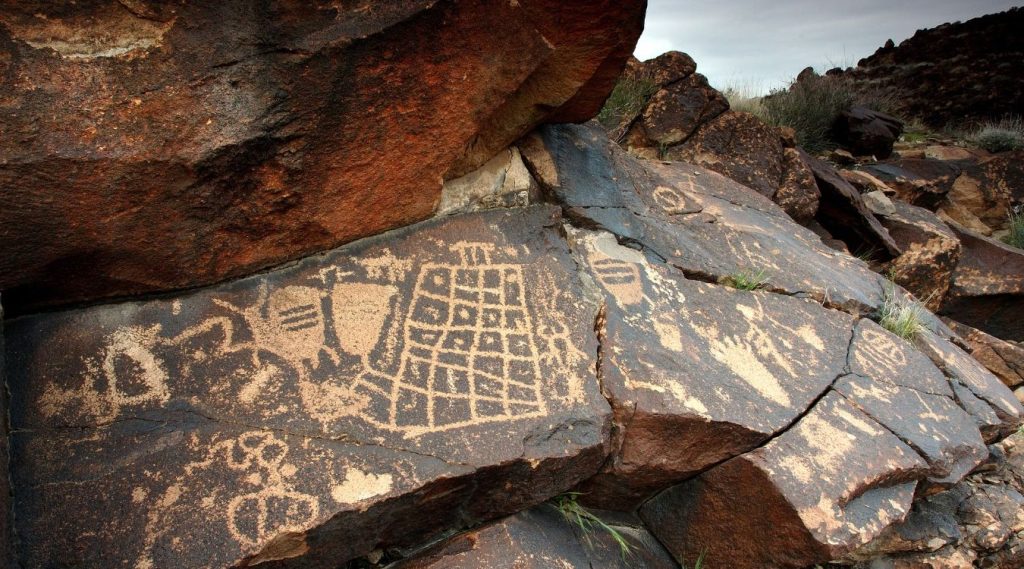
6. Sloan Canyon National Conservation Area – Near Henderson
Sloan Canyon offers one of the most impressive collections of Indigenous rock art in Southern Nevada, with more than 300 rock art panels containing roughly 1,700 individual design elements.
The Petroglyph Canyon area is a great example of how close you can be to Las Vegas while still feeling like you’ve stepped into a much older and quieter landscape. The canyon combines rock art with volcanic geology, desert scenery, and hiking opportunities.
Best For: Las Vegas visitors who want to get beyond the Strip, hikers, and rock-art enthusiasts
Road Trip Worthy? You don’t need a road trip for this one, but it’s a great addition to a Southern Nevada adventure.
Highlights: More than 300 rock art panels, desert scenery, hiking
Best Time to Visit: Fall, winter, and spring for more comfortable hiking temperatures
Good to Know: Access and trailhead information can change, so check current BLM conditions before visiting.
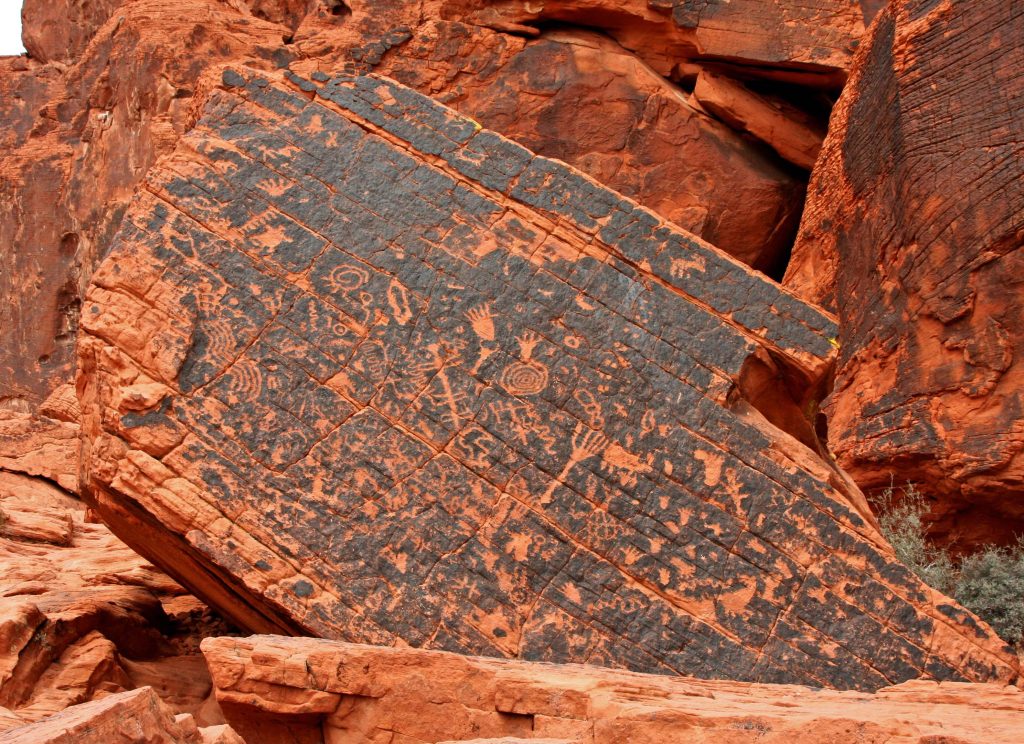
7. Valley of Fire State Park – Near Overton
Valley of Fire is one of the most spectacular places in Nevada to see ancient rock art and the scenery isn’t exactly a bad bonus. It is one of our favorite places to visit.
The park’s bright red sandstone formations provide the backdrop for numerous petroglyph sites. Atlatl Rock and Mouse’s Tank are two of the best-known places to see them. According to Nevada State Parks, the park contains petroglyphs dating back more than 2,000 years
The combination of ancient rock art and bizarre red-rock formations makes Valley of Fire one of those places where you can spend the day exploring without running out of things to see.
Best For: First-time visitors, photographers, families, and anyone who wants scenery with their history
Road Trip Worthy? 100%. Valley of Fire is practically made for a Nevada road trip.
Highlights: Atlatl Rock, Mouse’s Tank, ancient petroglyphs, red-rock formations
Best Time to Visit: Fall through spring
Good to Know: Summer heat can be intense, and seasonal trail closures may be in effect. Check current conditions on the park website before visiting.
Up Next: Valley of Fire State Park: Nevada’s Hidden Gem
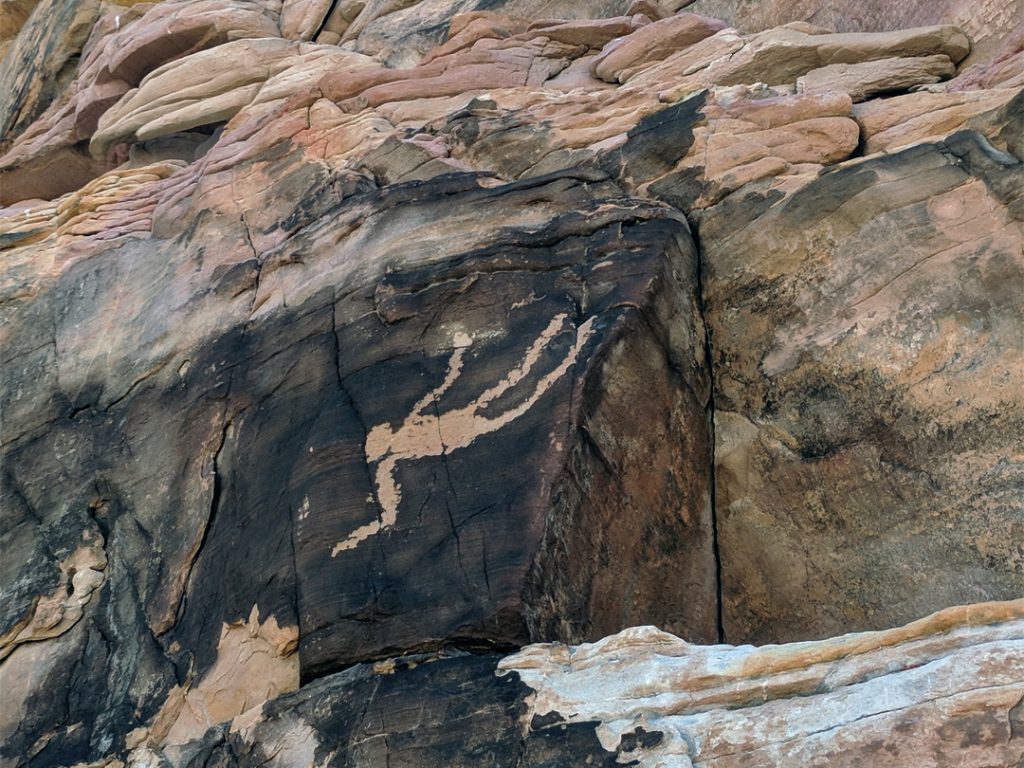
8. Gold Butte National Monument – Near Mesquite
If you’re looking for a more rugged Nevada experience, Gold Butte National Monument delivers.
This enormous desert landscape contains ancient rock art along with striking sandstone formations, Joshua trees, mountains, and miles of rugged backcountry. One of the better-known pieces of rock art in the area is the Falling Man petroglyph, another is newspaper rock, among many other images.
Gold Butte isn’t the kind of place where you simply pull into a paved parking lot and follow a marked path. Many roads are rough and none are paved, there are no services here, and cell service can be unreliable.
Best For: Experienced road trippers, backcountry explorers, photographers, and anyone who loves remote Nevada
Road Trip Worthy? Absolutely, but make the trip part of the adventure and prepare accordingly.
Highlights: Petroglyphs, dramatic rock formations, rugged desert scenery
Best Time to Visit: Fall through spring for more comfortable temperatures
Good to Know: Check the road conditions and bring plenty of water, food, navigation tools, and a vehicle suited to the terrain. Carry a roadside emergency kit with you whenever you go on a road trip.
Pro Tip: Be sure to have a spare tire. Driving rough roads often causes flats.
Petroglyphs in Eastern Nevada
Some of Nevada’s most fascinating rock art sites are scattered through the remote landscapes of eastern Nevada.
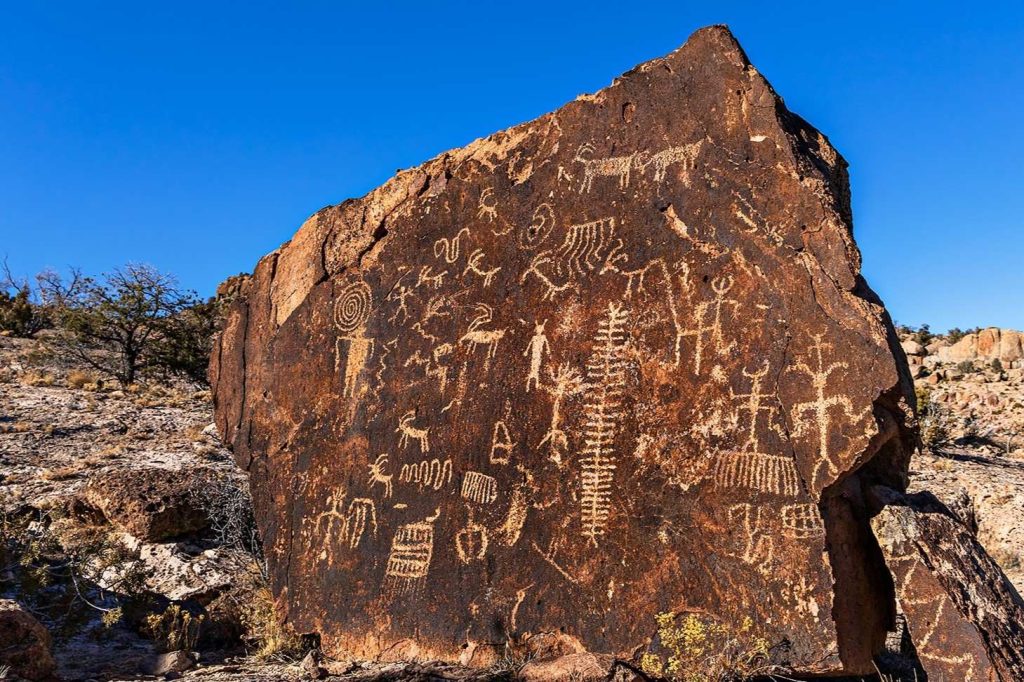
9. Ash Springs Rock Art Site – Near Alamo
Ash Springs, located in the Pahranagat Valley, features petroglyphs, that are pecked and display a wide range of line widths. This rock art adorns surfaces that have been subject to weather.
The site sits on a hill, overlooking the valley below. The BLM has created a short trail meandering through the boulders to visit the many panels. There are 18 markers to be found in the jumble of boulders.
Best For: Travelers exploring the Alamo and Pahranagat Valley area
Road Trip Worthy? Yes, especially as part of a larger Basin and Range Road trip. Make the hot springs part of your trip after exploring the petroglyphs.
Highlights: Petroglyphs, desert scenery
Best Time to Visit: Spring and fall
Good to Know: Some rock-art sites in this region require uneven walking or high-clearance vehicles, so check current site information before heading out.
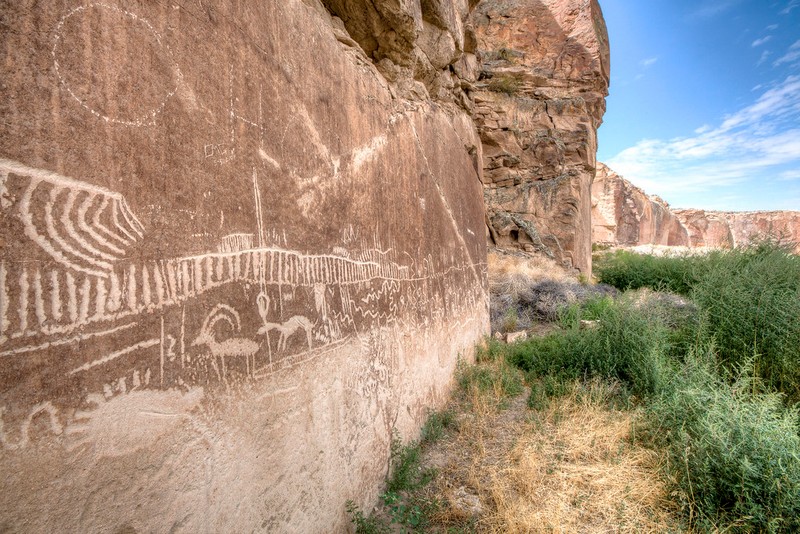
10. White River Narrows – Near Alamo and Goldfield
White River Narrows is home to one of the largest concentrations of prehistoric rock art in eastern Nevada.
The archaeological district covers thousands of acres and contains numerous rock-art sites, with some artwork dating back thousands of years. This is an out and back trail that stops at each of the 5 petroglyph sites. Due to the rhyolite rocks that form the canyons, the petroglyphs have been very well preserved and are still easy to see today.
Best For: Rock-art enthusiasts, history lovers, and adventurous road trippers
Road Trip Worthy? Definitely. This site is one of three near Alamo.
Highlights: Extensive rock art, remote landscape, archaeological history
Best Time to Visit: Spring and fall for milder temperatures
Good to Know: Plan ahead. This is remote Nevada, and you’ll want to be prepared for limited services and changing road conditions.
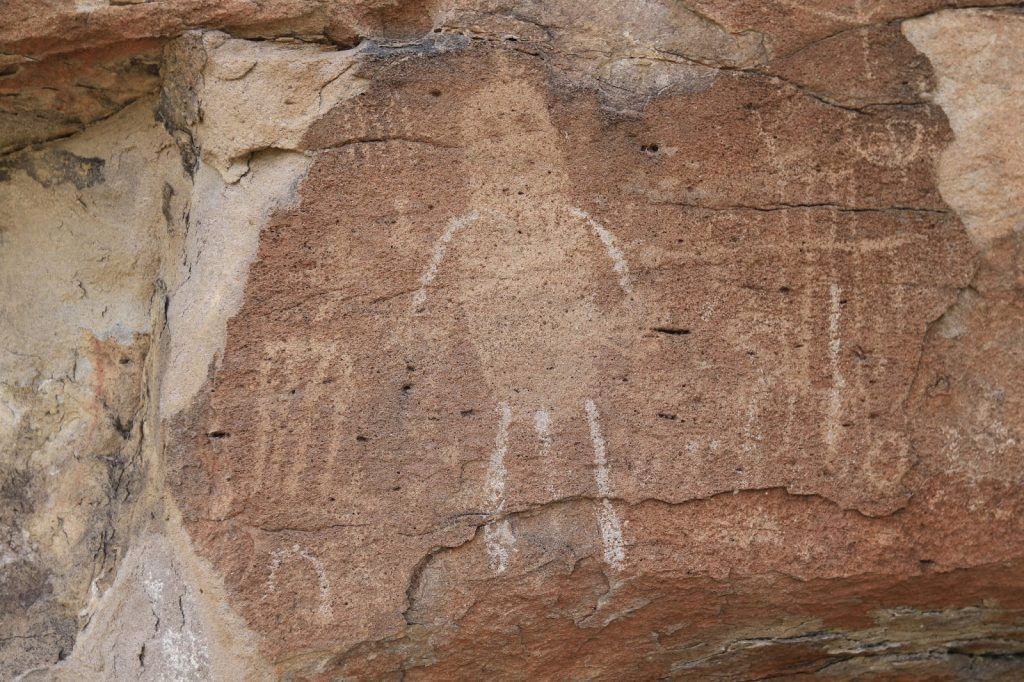
11. Mount Irish Archaeological District – Near Alamo
Mount Irish is another fascinating stop in the Basin and Range region, with multiple rock-art sites spread throughout a rugged desert landscape.
Some of the greatest concentrations are found around Shaman Hill and Shaman Knob. The area also contains imagery associated with the Pahranagat style of rock art, including the distinctive anthropomorphic figure known as the “Pahranagat Man.”
Mount Irish is especially interesting because the archaeological sites are part of a much larger landscape rather than a single easy roadside attraction.
Best For: Road trippers who enjoy archaeology, remote landscapes, and getting away from the crowds
Road Trip Worthy? Yes. This is one to combine with other Basin and Range destinations rather than visit as a stand-alone stop.
Highlights: Multiple rock-art sites, scenic vistas, Pahranagat-style imagery
Best Time to Visit: Spring and fall
Good to Know: Basin and Range National Monument is remote, with limited amenities and unreliable cell service. Download maps before you go because GPS may not work.
12. Toquima Cave – Near Austin
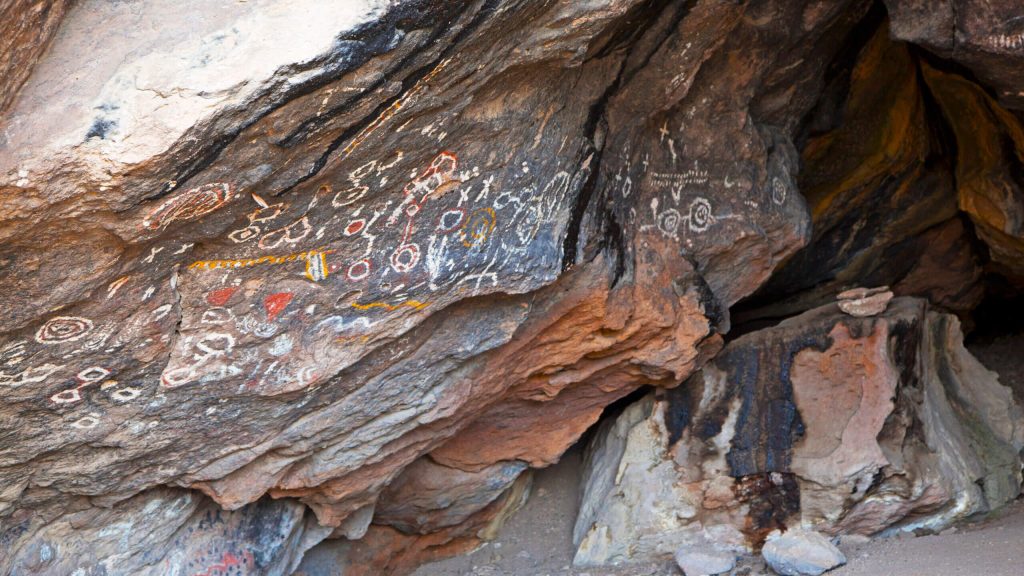
Toquima Cave is a little different from most of the sites on this list because the artwork inside the cave consists of pictographs rather than petroglyphs.
The volcanic rock shelter was used thousands of years ago, and the interior contains painted images in red, yellow, black, and white pigments. The cave’s orientation helped protect the artwork, making these unusually well-preserved examples of ancient rock art.
To protect the site, the cave itself is barricaded, keeping visitors at a respectful distance while still allowing glimpses of the artwork. You are still able to get great pictures here.
Best For: Rock-art enthusiasts and travelers interested in Nevada’s less common pictograph sites
Road Trip Worthy? Yes, particularly if you’re already exploring central Nevada.
Highlights: Ancient pictographs, volcanic rock shelter, Hickison wild burro herd
Best Time to Visit: Spring and fall
Good to Know: This is a protected archaeological site. Respect barriers and never touch, alter, or attempt to enter protected areas.
Rock Art Adventures in Southern Nevada
13. Black Canyon – Near Boulder City
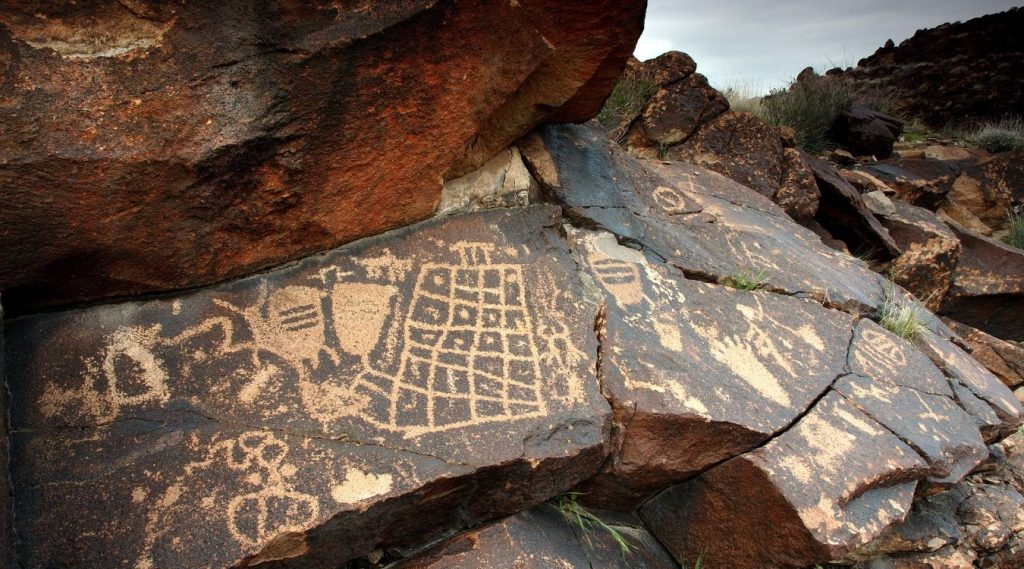
Black Canyon combines two things that make Nevada adventures so much fun: ancient history and dramatic scenery. This wilderness unit is a maze of peaks and side canyons with vertical cliffs extending to the edge of the Colorado River.
Located along the Colorado River, the area contains petroglyphs and offers a completely different landscape from the dry desert trails around Las Vegas. Depending on the access point and activity, the area can be explored by boat or on foot.
Best For: Adventure travelers, paddlers, and anyone who wants to combine history with the Colorado River
Road Trip Worthy? Yes. It’s a great addition to a Hoover Dam or Boulder City adventure.
Highlights: Petroglyphs, Colorado River scenery, boating and hiking opportunities
Best Time to Visit: Spring and fall for more comfortable conditions
14. Grapevine Canyon – Near Laughlin
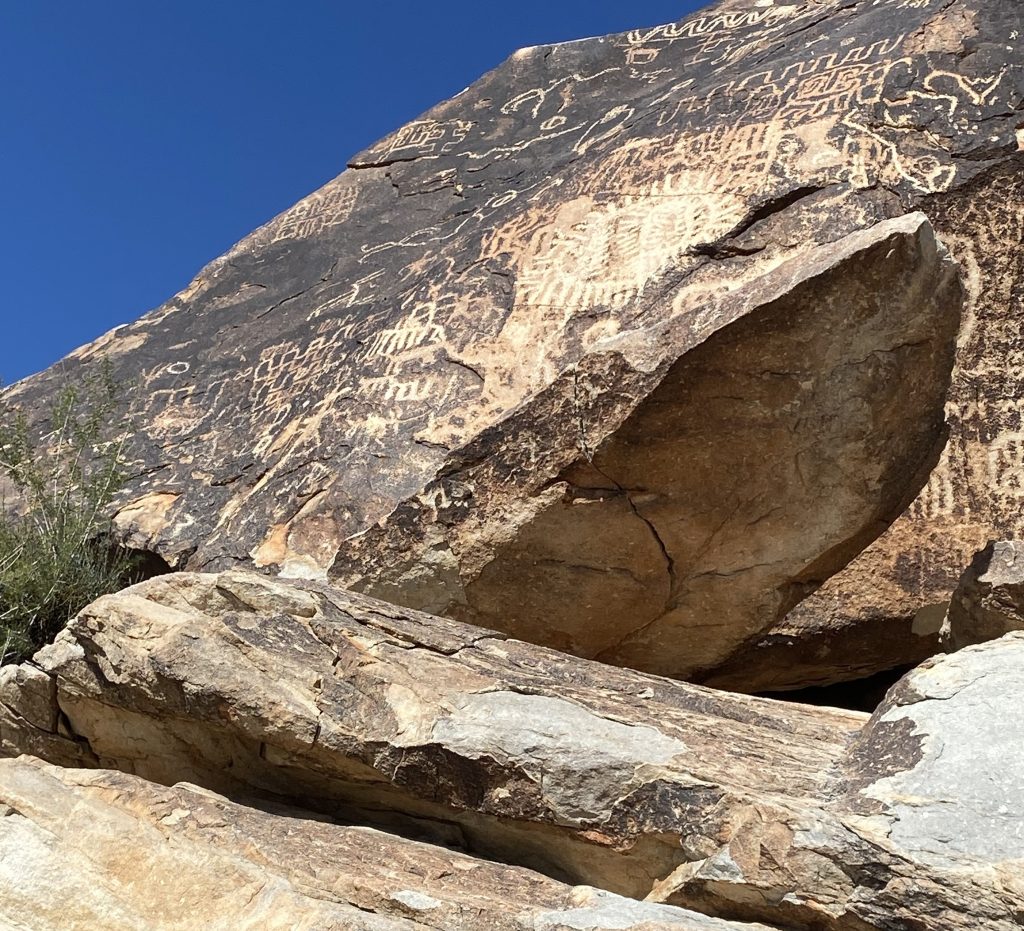
Grapevine Canyon is one of those Nevada places that feels like you’ve stumbled onto something much bigger than you expected. Another favorite place for us, there is so much to do here.
The canyon contains thousands of petroglyphs spread across the rocks, along with desert vegetation and a landscape that feels surprisingly different from the surrounding Mojave Desert. As part of Avi Kwa Ame National Monument, the parking area is right off Christmas Tree Pass. It is a short walk to the petroglyphs, which was a bonus for us!
Best For: Rock-art lovers, photographers, and road trippers exploring Southern Nevada
Road Trip Worthy? Definitely. Combine it with exploring Avi Kwa Ame National Monument, Keyhole Canyon, Laughlin, and other nearby desert adventures.
Highlights: Thousands of petroglyphs, canyon scenery, desert landscape
Best Time to Visit: Fall through spring to avoid the worst summer heat
Learn More: Exploring Avi Kwa Ame National Monument: A Journey Through History, Nature, and Sacred Lands
15. Keyhole Canyon – Near Searchlight
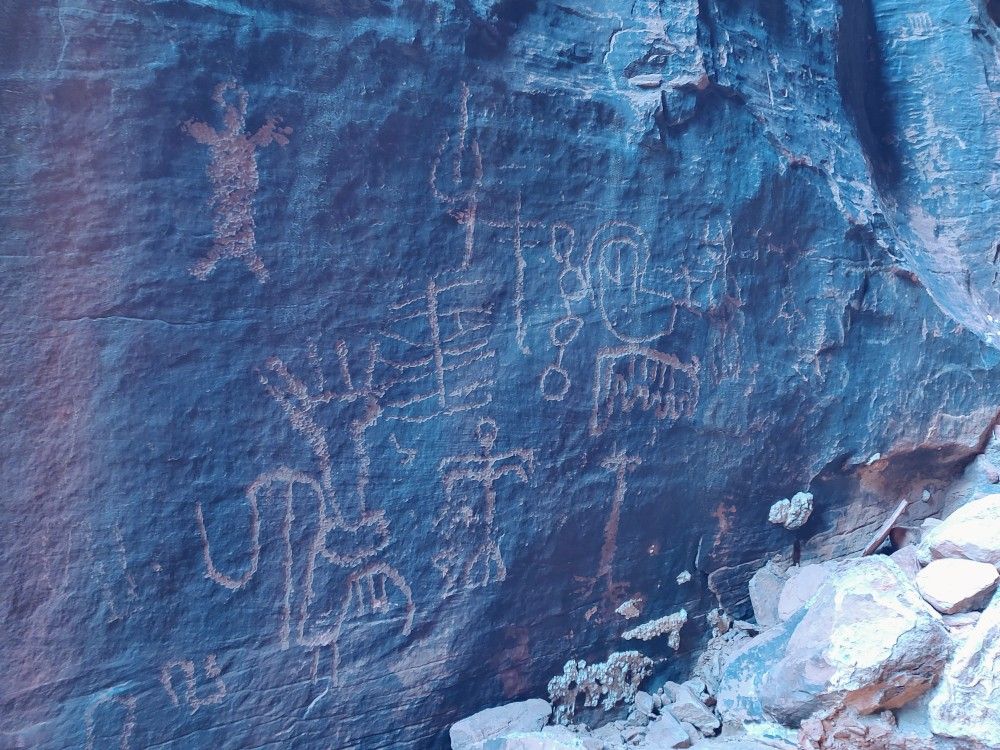
Keyhole Canyon is a great example of how some of Nevada’s rock-art sites don’t require a huge hike to reach.
The canyon contains numerous petroglyphs, including many located unusually high on the canyon walls. That makes a zoom lens camera or digital binoculars especially useful. You don’t need to climb the canyon walls to see them, and you definitely shouldn’t. A good camera can give you a much closer look while allowing you to enjoy the site without disturbing it.
You can literally drive up to this canyon; however, these are not paved roads. You will need to get directions before you head out because it is remote.
Best For: Travelers looking for a short rock-art adventure and photographers
Road Trip Worthy? Yes, especially when combined with other Southern Nevada stops.
Highlights: Abundant petroglyphs, short box canyon, unusual high-wall carvings
Best Time to Visit: Late fall through early spring
Good to Know: This site has no facilities near the area, so be prepared. A full tank of gas is a must, make sure your spare tire is properly inflated, there is minimal to no cell coverage in the area.
Planning a Nevada Petroglyph Road Trip
One of the best things about exploring Nevada’s rock art is that you don’t have to see everything in one trip. In fact, you shouldn’t.
The sites are spread across the state, so it’s much more enjoyable to build them into road trips you’re already planning.
A few ideas for trips:
Fallon & U.S. 50
Combine Grimes Point, Hidden Cave and Hickison Petroglyph Recreation Area. You can also make a little longer trip with other U.S. 50 stops.
This makes a great introduction to Nevada’s archaeological sites without requiring a major backcountry adventure.
Southern Nevada
Combine Valley of Fire, Gold Butte, Red Rock Canyon, Sloan Canyon, Grapevine Canyon and Keyhole Canyon.
This route gives you a mix of easy-to-access sites, scenic drives, hiking, and more remote desert adventures.
Pahranagat Valley & Basin and Range
Combine Ash Springs, Mount Irish, White River Narrows and other rock-art sites around Basin and Range National Monument.
This is the trip for travelers who really want to get away from the crowds. The area is remote, with limited amenities and unreliable cell service, so preparation matters.
Central Nevada
Combine Hickison Petroglyph Recreation Area, Toquima Cave, Austin and other U.S. 50 towns.
This works especially well as part of a longer Nevada road trip rather than a quick weekend getaway.
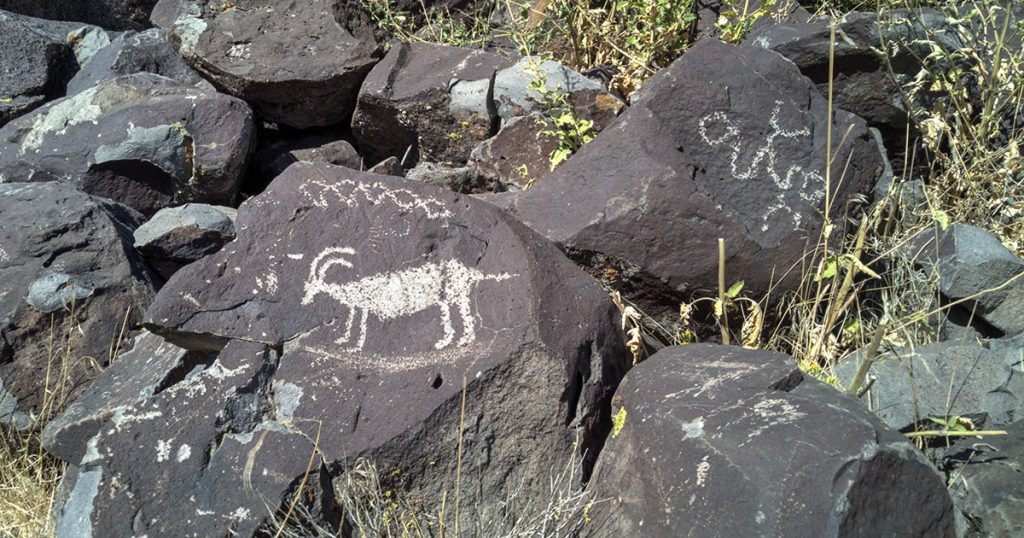
Respecting Nevada’s Ancient Rock Art
Petroglyphs and pictographs are irreplaceable cultural resources, and many are still important to Indigenous communities today.
When visiting:
-Never touch the rock art.
-Don’t climb on or around panels.
-Never add your own markings.
-Don’t chalk, paint, or trace the images.
-Stay on established trails when they exist.
-Don’t remove rocks, artifacts, or other cultural materials.
-Keep pets under control where they are permitted.
-Pack out everything you bring in.
-Respect barriers and closures.
At sites such as Grimes Point, BLM specifically asks visitors to stay on the trail and respectfully view the petroglyphs. Remember that you’re visiting places that have survived for thousands of years. The goal is to leave them looking exactly as you find them. Always follow Leave No Trace principles when exploring outdoors.
Learn More: Preserve the Wild: A Simple Guide to Leave No Trace for Every Outdoor Adventure
Final Thoughts: Nevada’s Stories Are Written in Stone
Exploring Nevada’s petroglyphs and rock-art sites is one of my favorite ways to see a different side of the state.
You might start the day thinking you’re heading out to look at some ancient carvings, only to find yourself driving down a lonely desert highway, exploring a canyon, discovering an unexpected viewpoint, or wandering through a landscape you’ve never seen before. That’s what makes these places so much fun.
Some sites are easy to reach. Others take planning, patience, and a capable vehicle. Some can be visited in an hour, while others deserve to be part of a much bigger Nevada road trip. But every one of them offers a reminder that people were traveling across and living in these landscapes long before our modern highways and towns existed.
So, the next time you’re planning a Nevada road trip, don’t just look for the scenic overlook or the quirky roadside attraction. Look down at the rocks, you might find a story that’s been there for thousands of years.
We love sharing tips and information we learn along the way to help you plan your next adventure. We hope to inspire you to find your adventures, have lots of fun and make many memories.